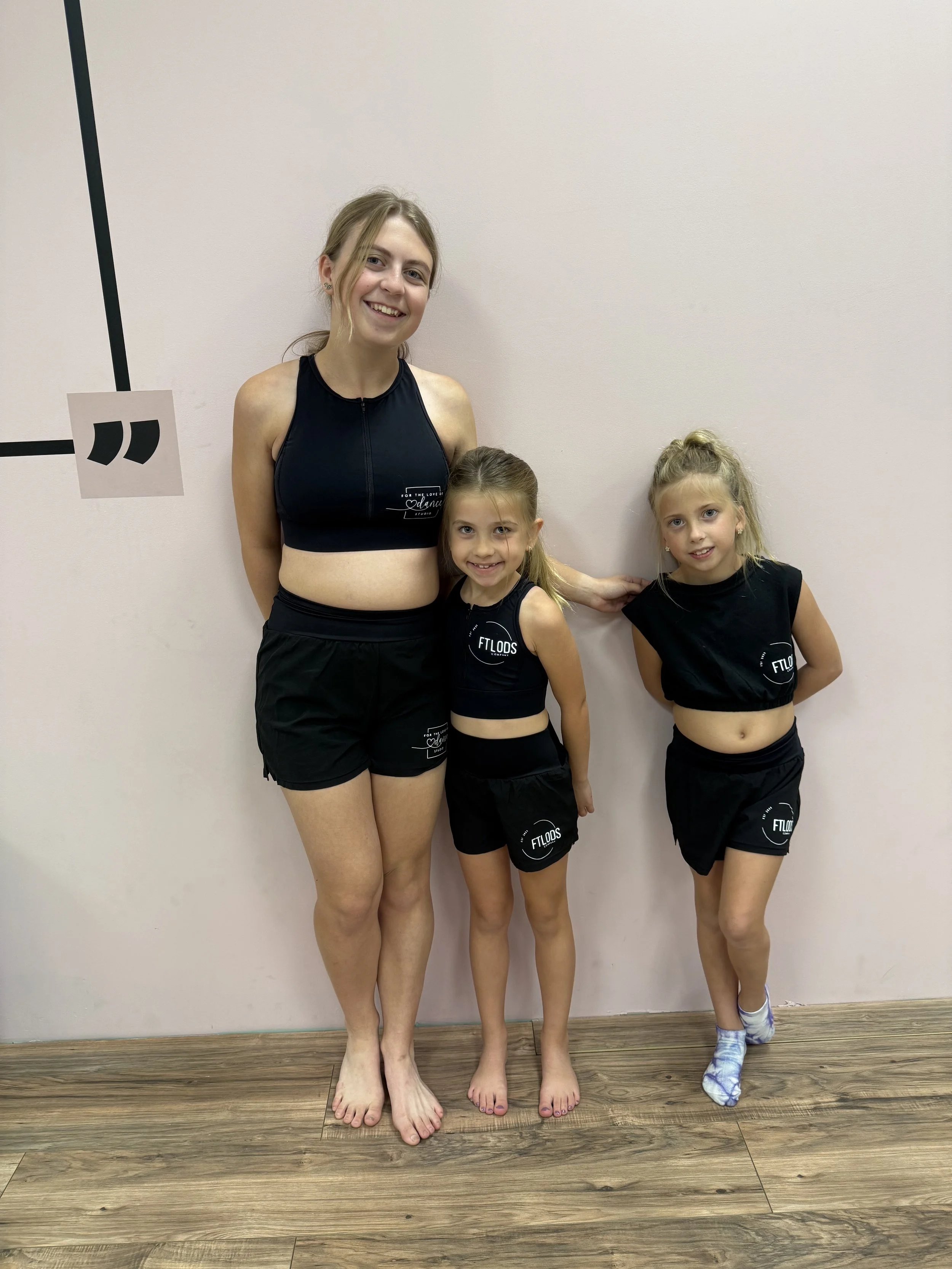
Dressed for success….why what you wear to dance class matters
It’s 4:47 p.m. Backpacks are exploding with crumpled homework, someone is still wearing a snack on their face, and you’re asking for the third time where the leotard went—only to hear, “I wore it yesterday.” Shoes are missing (how is that possible when you only need two?), hair ties have vanished into another dimension, and the clock is ticking toward a 5:00 dance class that waits for no one. “Can you move in what you’re wearing?! OK, let’s go!” If getting your dancer out the door after school feels like a small-scale emergency every week, we get it.
So why does it matter if they are in leggings and a t-shirt? They can still do a split, so what’s the big deal?
When we dress like a dancer, we feel like a dancer. When we feel like a dancer, we take class like a dancer. Dancers who come dressed for a playdate, tend to have a playdate in class.
Having your kids in dance class helps improve physical & emotional health as well their social skills & creativity! So to make the most of every class, we want to come prepared for a learning environment.
You wouldn’t go to football without your cleats and helmet, right?!
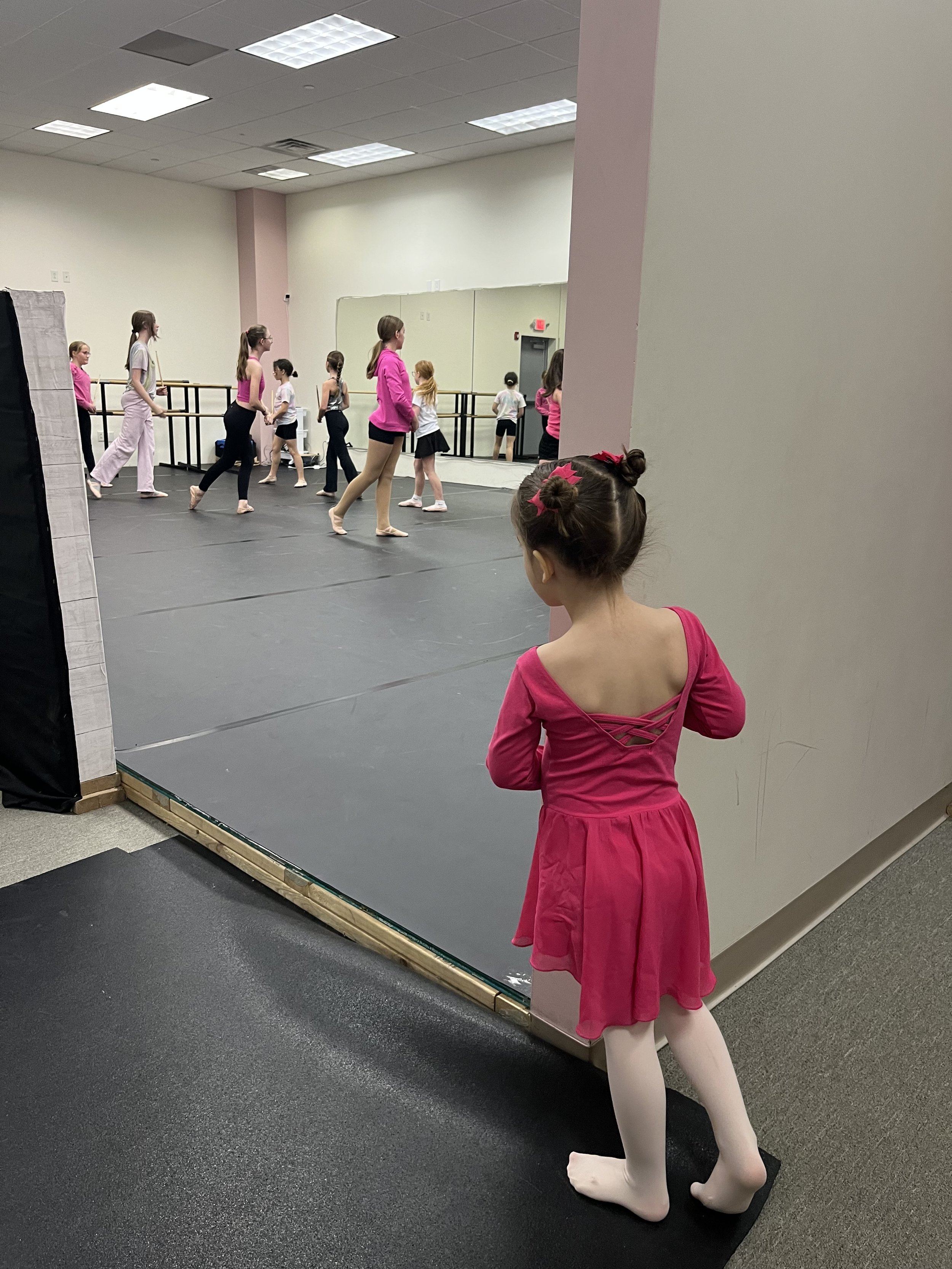
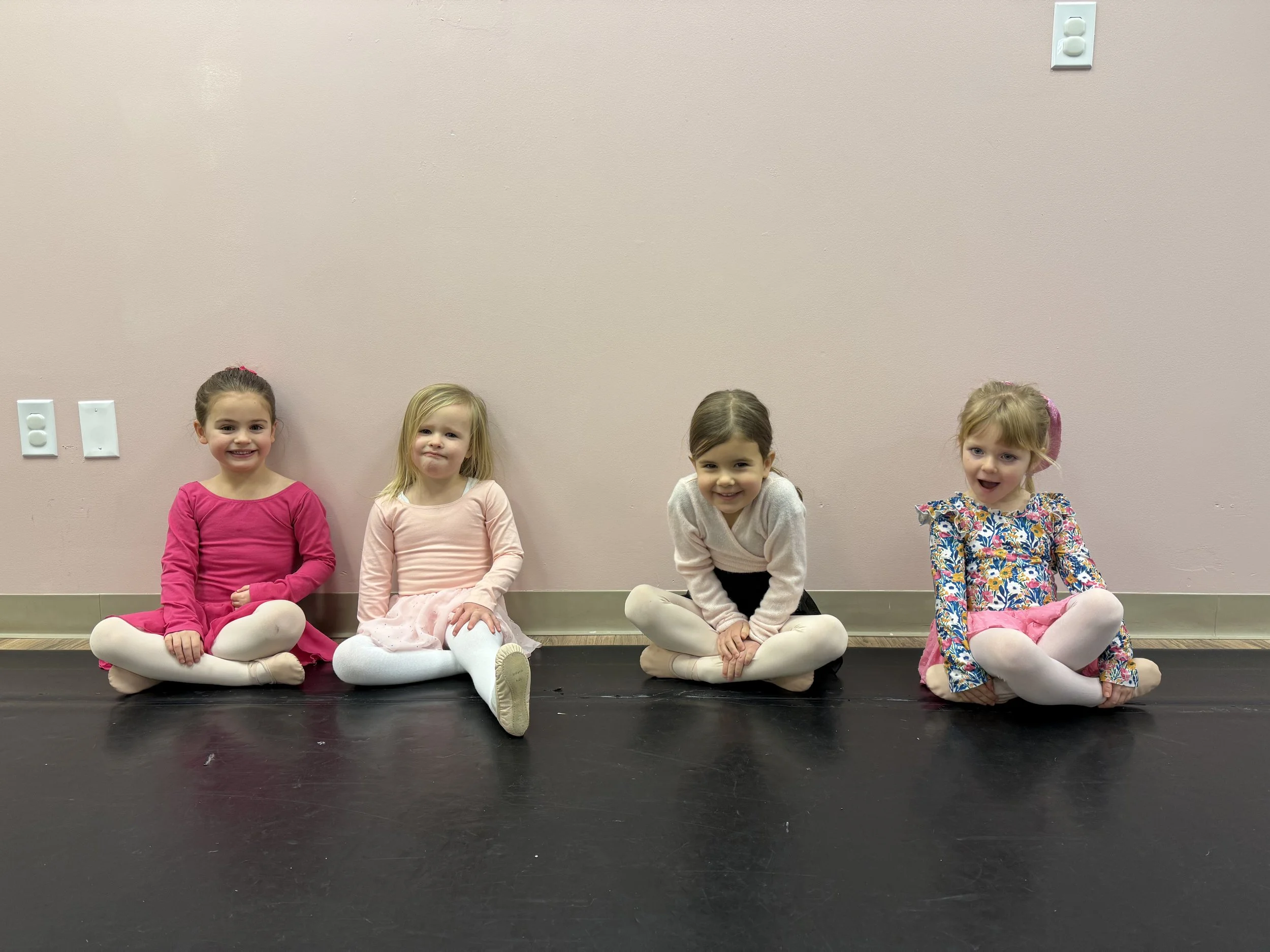
Being properly dressed for class helps our dancers get in the right mindset. Teachers need to see the body clearly to correct posture & alignment. Wearing loose fitting clothes can hide mistakes (which slows your progress!). Having hair up & off the face prevents distraction as they move. This all helps dancers learn the habit of being prepared, even from a young age.
So before walking out the door, ask yourself “would they wear this to a friends house?” If the answer is yes, you may need a quick change.
Here’s a checklist for a full night of classes:
Ballet:
Tights (keeps muscles warm to prevent injury) - convertible is best if taking multiple classes!
Leotard/biketard (best) or athletic separates that are tight fitting (good) - helps teachers correct proper alignment
Ballet skirt/shorts can be added for dancers comfort
Tap/Jazz:
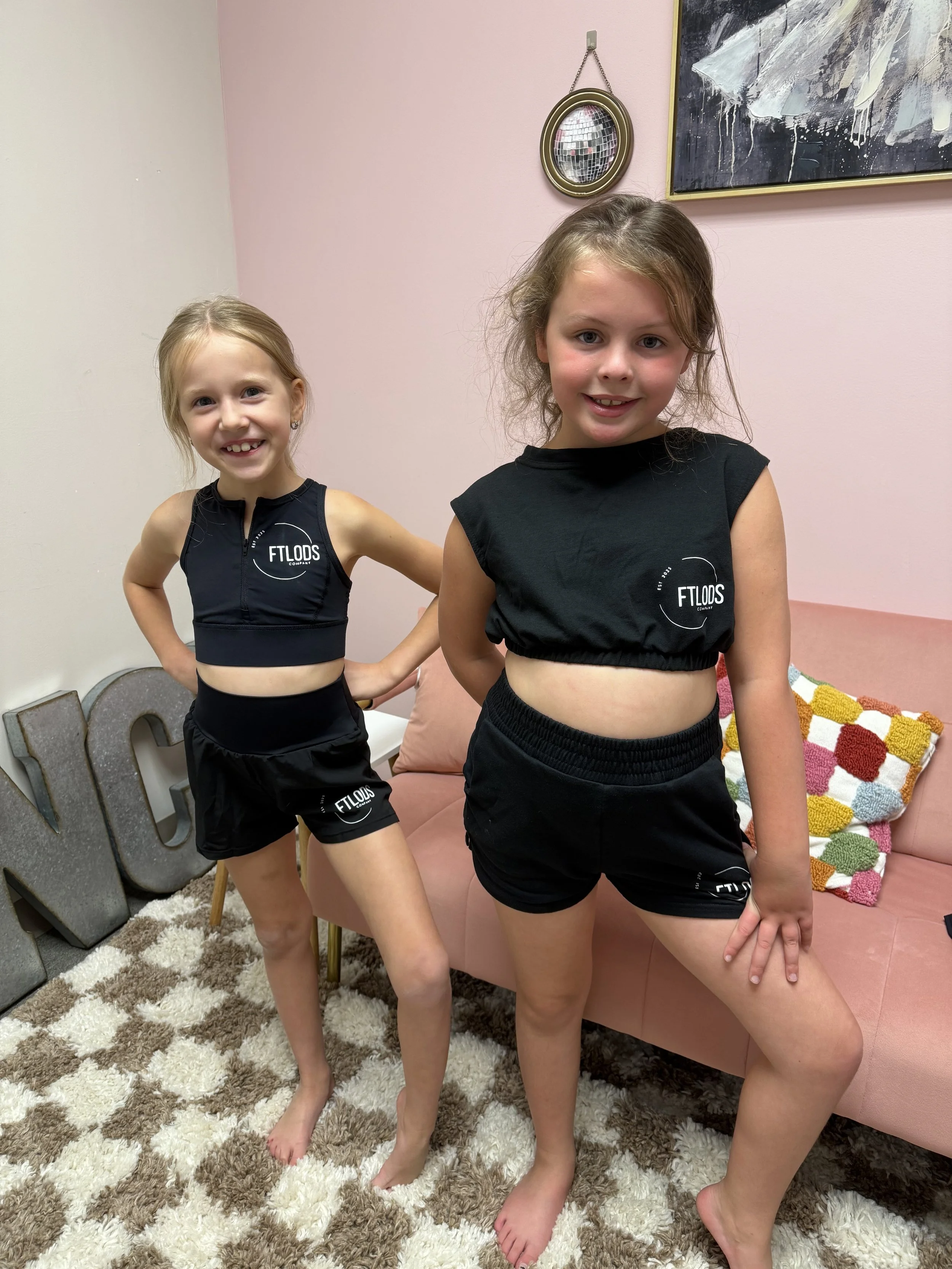
Keep what you have on above (Leo/tights) but can add shorts/leggings
Hip Hop:
Keep what you have on (Leo/tights) but can add baggy sweatpants & t-shirts (Miss Lori prefers it)
Acro:
Remove baggy/extra clothing and convert your tights for barefoot (footed tights in acro risks slip & fall)
Make the most of every class! At FTLODS, we offer studio exclusive dance wear and shoes through our online store to help dancers put their best foot forward. All items in our store are approved for ANY class you take, ship to the studio for pickup at no extra charge and can be returned/exchanged if needed all at an affordable price. Visit our store here:
See you in class! Dance on!
Tiny Dancers…Big Steps!
Let’s set the scene - you’ve purchased the shoes & leotard, they’ve twirled in the living room dreaming of dance class. You snapped the cutest pic in the world on your way to the studio. You walk in ready for the cuteness overload & then....TEARS! Your budding ballerina has no desire to step into class no matter how fun it looks. The initial thought? Turn around and run! But we understand this whole scenario. Ask any of our teachers - most of them cried their first class, first month or whole first year (Miss Lori refused to go on stage her first recital!)
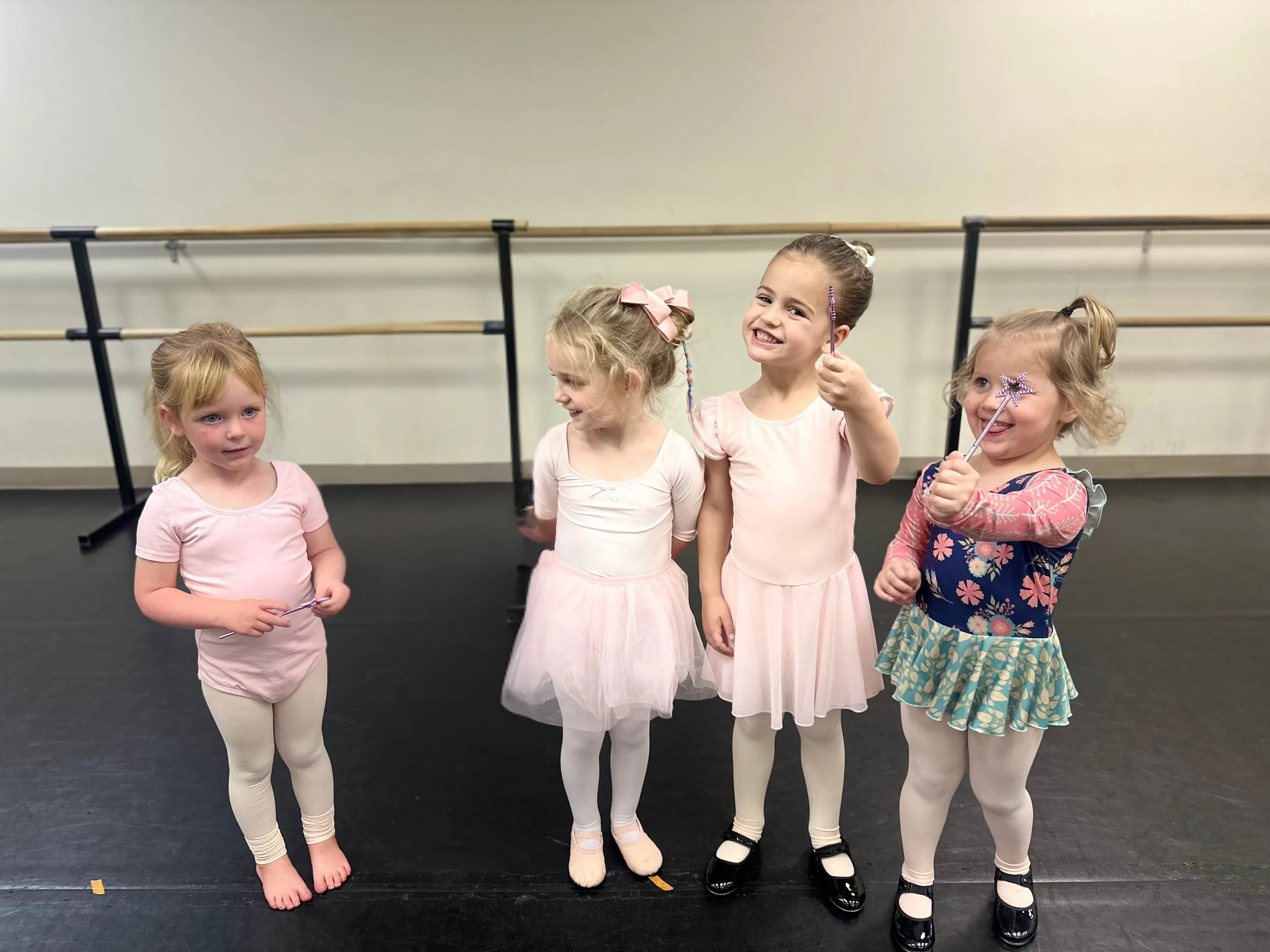
First let’s understand, we’re learning more than just steps here! Our goal for our youngest dancers is not a perfect plie.
Here are the 3 benchmark goals for our 2-4 year olds & tips to help them get there!
1. Going into class on their own
One of the hardest transitions for our youngest dancers isn’t the dancing - it’s separating from their grown-up.
While it’s completely natural to want to prepare your child, repeatedly saying things like “you have to go in without me” or “Mommy can’t come with you” can unintentionally increase anxiety. When we emphasize separation, little minds start focusing on what feels scary instead of what feels exciting.
Let confidence and excitement outshine separation!
“Your teacher will be so excited to see you today!”
“You get to show me your dance moves after class!”
“I’ll be right here when you’re done”
Make what they get to do, who they get to see and what happens after your focus to help them feel confident going into class!
2. Following Direction
Dance gives children the benefit of developing listening skills (stopping and starting with the music), processing skills (hearing an instruction and acting on it), impulse control (waiting for their turn), body awareness (understanding how to move when asked) & independence (responding to a teacher without a parent’s help)
& THAT’S HUGE!
We know these skills also help kids thrive in preschool and beyond.
Support your dancers progress by playing a song from class at home (or in the car!) - and dance along!
3. Working with others
At FTLODS, we celebrate learning to move together just as much as moving with grace. For our youngest dancers, “working with others” is learning to stand in a line, take turns, share space & celebrating others! These are building blocks of teamwork & friendship and we practice them in every single class!
Sometimes the biggest win is simply walking through the door.
If they had a particularly hard class, ask them what they will try next time! Confidence grows with practice - one small step at a time!